
The Science of Presence: Why Free-Roam VR Feels So Real
(and Why You'll Love It at Zero Latency)
Zero Latency VR – South Austin • Updated January 2026
Ready to Experience Presence for Yourself?
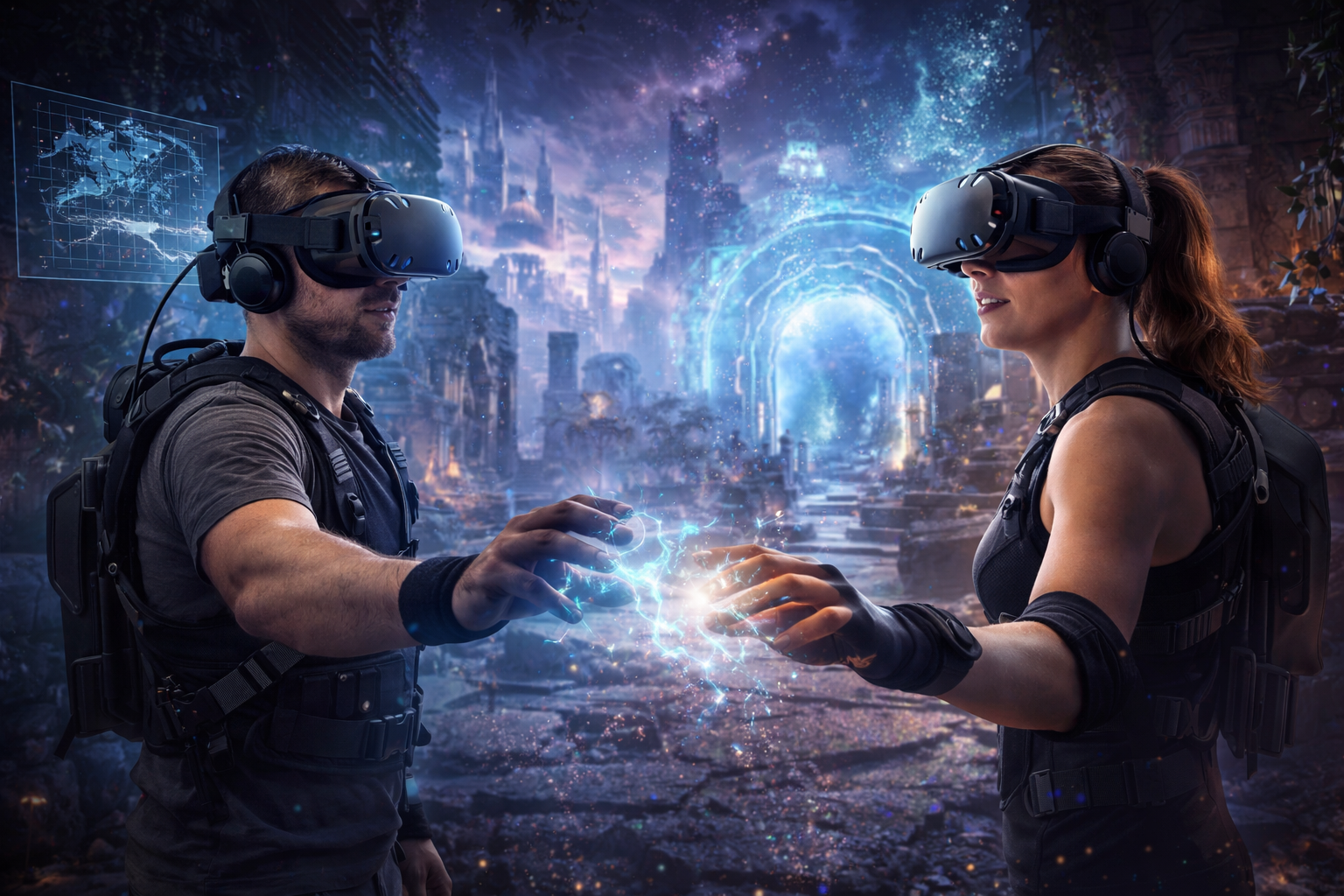
Ever had a moment in virtual reality where your brain knows it's a game—but your body reacts like it's real? That feeling is called presence, and it's the secret sauce behind free-roam VR. Presence is what makes a zombie lunge feel urgent, an alien corridor feel huge, and a teammate's cover call feel genuinely helpful—not just 'on a screen.'
In this article, we'll break down what presence is (in plain English), what makes it stronger, and how Zero Latency's free-roam format is designed to maximize it—so first-timers get comfortable fast and groups leave talking about it for days.
Quick takeaways
Presence is the 'I'm really there' feeling created by your senses, movement, and believable interactions.
Free-roam VR increases presence because you walk naturally, share space with friends, and react in real time.
Good onboarding matters: comfort, clarity, and confidence are what turn a first session into a repeat visit.
The best sessions feel like a co-op movie scene—everyone communicates, adapts, and celebrates wins together.
What 'Presence' Means in VR (Without the Jargon)
Presence is the sense that you are located inside an experience—not observing it. Researchers often describe it as the illusion of 'being there' in a mediated environment. You don't need to study psychology to recognize it: it's when you instinctively lean around a corner, brace for impact, or laugh because you forgot you're in a warehouse in South Austin.
Presence is different from graphics quality. High-resolution visuals help, but presence is more about timing, motion, and coherence: do your actions match what your eyes and ears report? Does the world respond believably? Is your brain getting a clean, consistent story from your senses?
Why Free-Roam VR Feels More 'Real' Than Standing Still
Many at-home VR experiences happen in a small play area where you mostly pivot and teleport. That can still be fun—but it can also keep your body in 'spectator mode.' Free-roam VR flips that: you move naturally through a large physical space while your avatar moves the same way in the virtual world.
1Natural walking = fewer weird mental shortcuts
When you walk, your brain expects matching feedback: steps, balance shifts, head movement, and visual flow. If those match, your brain relaxes into the scene. Natural locomotion reduces the 'video game' feeling and supports stronger presence.
2Shared space with friends creates social reality
Humans calibrate reality through other humans. When you can see your friends' avatars in the same space, hear them react, and coordinate in real time, the world gains credibility. The jokes, callouts, and 'watch your left!' moments make it feel like a real team activity instead of parallel solo play.
3Real-time co-op decisions make the story feel personal
Presence spikes when you feel agency—when what you do matters. In free-roam co-op, your group's decisions change the moment-to-moment outcome: who covers, who heals, who pushes objective, who hangs back. That shared agency is a big part of why people leave saying, 'We were IN it.'
The Presence 'Comfort Curve': What First-Timers Usually Feel
If you're bringing a group with a mix of gamers and non-gamers, here's the good news: most people follow a predictable comfort curve, and it happens fast when the onboarding is done right.
Minute 0–2: Curiosity + a little awkwardness
Everyone is learning how to wear the headset, how the controllers feel, and what the rules are. This is normal.
Minute 3–7: 'Oh… this is bigger than I expected.'
Once players start walking and seeing scale—hallways, rooms, open areas—presence ramps up quickly. This is where the first laughs and surprised reactions happen.
Minute 8–20: Flow state (the sweet spot)
When the controls are no longer the focus, players shift to teamwork: calling targets, moving as a unit, and reacting instinctively. This is where groups bond and confidence builds.
After: The debrief effect
One underrated reason VR nights are memorable is that groups naturally debrief afterward—'Did you see that?' 'I can't believe we survived that push!' That shared story is the product you take home.
What Zero Latency Does to Boost Presence (and Reduce Friction)
Presence doesn't happen by accident. It's engineered through small choices that add up to a smooth first session.
A few elements that matter:
Clear pre-brief: Players do better when objectives and safety rules are simple and repeated.
Comfort-first pacing: Starting with easy wins builds confidence and reduces sensory overload.
Staff coaching: A good game master is part hype, part teacher, part air-traffic controller.
Room-scale freedom: Space to move naturally supports stronger presence than 'stand and swivel' play.
Co-op focus: Shared goals create communication, laughter, and a sense of 'we did this together.'
How to Get the Most Out of Your Session (Simple Tips)
These tips work whether you're a hardcore gamer or someone who hasn't touched a controller in years.
Talk early, talk often
Use quick callouts: left/right, reload, objective, cover, help. Communication is the cheat code.
Move like a team
Stay aware of where your friends are. Tight spacing isn't always best—just avoid splitting silently.
Let your brain 'buy in'
If you feel silly at first, give it a few minutes. Presence tends to click once you start walking.
Use your body
Lean, peek, and physically turn. Natural movement makes aiming and awareness easier.
Ask questions before you start
If something is unclear, ask during the briefing. A 10-second question saves 10 minutes of confusion.
Why Presence Is Perfect for Group Events in Austin
Austin has no shortage of 'things to do,' but not everything works for mixed groups. The magic of free-roam VR is that it's easy to join (you don't need a skill background) but deep enough to stay engaging. That makes it a strong pick for:
Birthday groups with mixed ages (adults, teens, and first-timers in the same party)
Corporate outings where not everyone wants a loud bar scene
Double-dates and friend groups looking for an experience that sparks conversation afterward
Out-of-town visitors who want something uniquely memorable
FAQ: Presence, Motion Sickness, and 'Will I Be Okay in VR?'
Do people get motion sick in free-roam VR?
It varies by person, but natural walking often feels more comfortable than artificial joystick movement or constant teleporting. If you're sensitive, tell your host and take breaks as needed.
Do I need gaming experience?
No. Presence is about natural movement and simple interactions. Most guests are surprised how quickly they adapt.
What should I wear?
Comfortable clothes and closed-toe shoes are ideal. You'll be moving around the arena.
Can my group play together?
That's the point. Free-roam VR is designed for shared co-op experiences where your team communicates and wins together.
Want to Feel It for Yourself?
Presence is hard to explain and easy to understand once you've tried it. If you're planning a night out in South Austin—or you're looking for a group activity that actually gets people talking—free-roam VR is one of the most 'wow' experiences you can do in person.
Book a session at Zero Latency VR – South Austin and bring your crew. We'll handle the onboarding—you just show up ready to step into a new world.
Ready to experience presence for yourself?
Book your session and bring your crew to Zero Latency VR – South Austin.