
Virtual Reality Training: Your Complete Guide
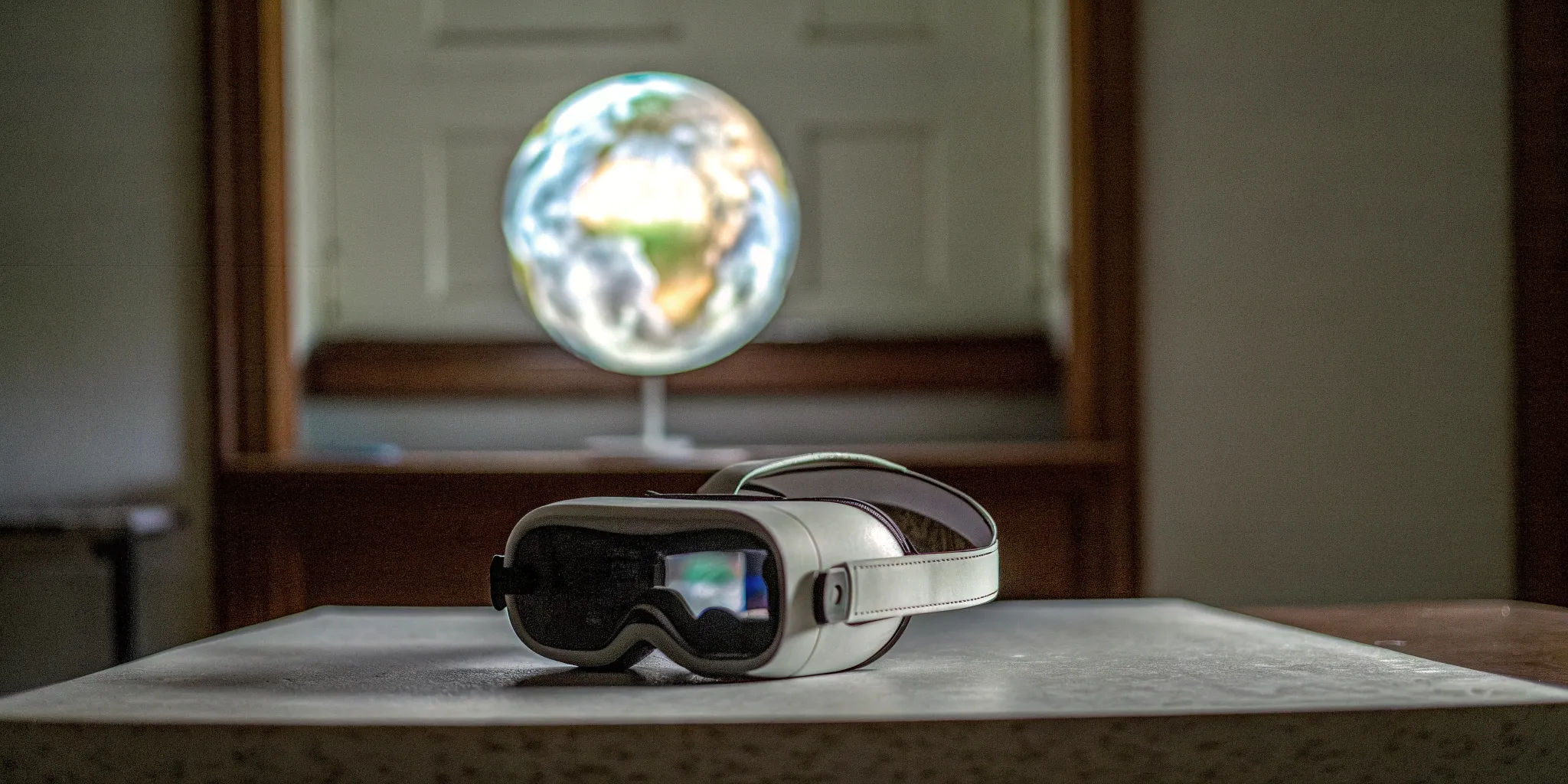
The magic of VR is its ability to create a sense of "presence," tricking your brain into believing you're truly somewhere else. While this is great for entertainment, it's a game-changer for employee development. The core idea behind virtual reality for training is to harness this deep immersion for educational purposes. Instead of just memorizing steps, trainees can physically perform tasks, interact with equipment, and navigate complex scenarios as if they were actually there. This hands-on approach creates stronger neural pathways, leading to better knowledge retention and confidence. Here, we'll explore how this technology is being used to make training more effective and engaging.
Key Takeaways
- Learn by doing, not just by watching: VR training moves learning from theory to practice. By physically performing tasks in a realistic simulation, you build muscle memory and retain knowledge far more effectively than with traditional methods.
- Practice for high-stakes situations without the risk: VR creates a safe space to master complex or dangerous procedures. This freedom to practice and fail without real-world consequences builds confidence while saving time and reducing costly errors.
- Start with your goals, not the gear: A successful VR program is built on a clear strategy. First, define what you want to achieve, then select the right technology and content to support those objectives.
Understanding Virtual Reality Training
Virtual reality training represents a fundamental shift in how we approach learning and skill development. Unlike traditional training methods that rely on passive consumption of information, VR creates an environment where learners become active participants in their education.
At its core, VR training leverages the brain's natural ability to learn through experience. When you put on a VR headset, your brain receives signals that convince it you're in a different environment. This isn't just visual – modern VR systems engage multiple senses, creating what researchers call "embodied cognition." Your body believes it's performing real tasks, which means the learning that occurs has real-world application.
The technology works by creating three-dimensional, computer-generated environments that users can explore and manipulate. Through hand controllers, haptic feedback devices, and spatial tracking systems, trainees can interact with virtual objects and environments in ways that closely mirror real-world interactions. This level of immersion creates what educators call "experiential learning" – knowledge gained through direct experience rather than abstract study.
The Psychology Behind VR Learning
The effectiveness of VR training isn't just about cool technology – it's rooted in solid psychological principles. When your brain believes you're in a real situation, it forms memories and develops skills as if the experience actually happened. This phenomenon, known as "transfer of learning," is what makes VR training so powerful.
Research shows that VR training can improve learning retention rates by up to 90%, compared to just 10% for traditional reading-based methods. This dramatic improvement comes from several psychological factors:
- Active engagement: Instead of passively receiving information, learners actively participate in scenarios, making decisions and seeing immediate consequences.
- Emotional connection: VR experiences often trigger emotional responses, and we know that emotionally charged experiences create stronger memories.
- Repetition without fatigue: Complex procedures can be practiced repeatedly without the resource constraints of real-world training.
- Immediate feedback: VR systems can provide instant feedback on performance, allowing for quick correction and improvement.
Industries Leading VR Training Adoption
Healthcare and Medical Training
The healthcare industry has been among the earliest and most enthusiastic adopters of VR training technology. Medical schools like Stanford and Harvard now use VR to teach surgical procedures, allowing students to practice complex operations before ever touching a real patient.
VR medical training offers several compelling advantages. Students can practice rare procedures multiple times, even if they might only encounter such cases once or twice in their careers. They can make mistakes and learn from them without risking patient safety. The technology also allows for standardized training experiences – every student can practice the same procedure under identical conditions.
Companies like Strivr and Osso VR have developed specialized platforms for medical training. These systems track hand movements, measure precision, and provide detailed performance analytics that help both students and instructors understand areas for improvement.
Aviation and Transportation
The aviation industry has used flight simulators for decades, but modern VR is taking this training to new levels. Airlines like Lufthansa and United Airlines are using VR to train pilots on emergency procedures, new aircraft systems, and even customer service scenarios.
VR training in aviation offers unique benefits. Pilots can experience dangerous weather conditions, system failures, and emergency situations without any real risk. They can practice procedures for new aircraft types before stepping into the actual cockpit. The technology also allows for scenario-based training that would be impossible or prohibitively expensive to recreate in real life.
Beyond aviation, companies like Walmart are using VR to train truck drivers, allowing them to practice in various weather conditions and traffic scenarios before hitting the road with real cargo.
Manufacturing and Industrial Safety
Manufacturing companies are embracing VR training to address safety concerns and improve operational efficiency. Workers can learn to operate dangerous machinery, practice emergency procedures, and understand complex industrial processes without exposure to real hazards.
Boeing uses VR to train technicians on aircraft assembly procedures, reducing training time by 75% compared to traditional methods. Ford Motor Company employs VR to help engineers design safer production lines and train workers on new assembly techniques.
The ability to practice with expensive or dangerous equipment without risk is particularly valuable in manufacturing. Trainees can make mistakes, learn proper procedures, and build confidence before working with real machinery. This approach reduces both training costs and workplace accidents.
Retail and Customer Service
Major retailers are discovering that VR can transform customer service training. Companies like Walmart and KFC use VR to prepare employees for challenging customer interactions, Black Friday scenarios, and new product launches.
VR customer service training allows employees to practice handling difficult situations in a stress-free environment. They can experience various customer personalities and scenarios, building confidence and developing problem-solving skills. The technology also enables consistent training across multiple locations – every employee receives the same high-quality training experience regardless of their location.
Types of VR Training Applications
Skill-Based Training
Skill-based VR training focuses on developing specific technical competencies. This might include learning to operate machinery, perform medical procedures, or master craft techniques. The key advantage is the ability to practice complex skills repeatedly without resource constraints.
Examples include:
- Welding training that teaches proper technique and safety procedures
- Surgical simulations for medical students and practicing physicians
- Equipment operation training for heavy machinery operators
- Fine motor skill development for manufacturing and assembly work
Scenario-Based Training
Scenario-based training places learners in realistic situations where they must apply knowledge and make decisions. This type of training is particularly valuable for developing judgment, critical thinking, and problem-solving abilities.
Common applications include:
- Emergency response training for first responders and healthcare workers
- Leadership and management scenario practice
- Customer service situation training
- Crisis management and disaster response preparation
Soft Skills Development
While VR is often associated with technical training, it's increasingly being used to develop soft skills. Virtual environments can simulate social interactions, allowing trainees to practice communication, leadership, and interpersonal skills.
Soft skills VR training includes:
- Public speaking and presentation skills
- Conflict resolution and negotiation training
- Cultural sensitivity and diversity awareness
- Team collaboration and leadership development
Benefits of VR Training
Enhanced Learning Retention
The immersive nature of VR creates stronger neural pathways, leading to better knowledge retention. Studies consistently show that VR training produces retention rates 2-4 times higher than traditional training methods.
This improved retention comes from several factors:
- Multi-sensory engagement that creates richer memories
- Active participation rather than passive consumption
- Emotional engagement that strengthens memory formation
- Contextual learning that connects information to real situations
Risk-Free Learning Environment
VR provides a safe space to practice dangerous or high-stakes procedures. Trainees can make mistakes, experience failures, and learn from consequences without real-world risks or costs.
This safety factor is particularly valuable for:
- Medical procedures where patient safety is paramount
- Industrial operations involving dangerous equipment
- Emergency response scenarios that would be dangerous to recreate
- High-cost situations where mistakes would be expensive
Standardized Training Experiences
VR ensures that every trainee receives exactly the same training experience. Unlike real-world training that can vary based on location, instructor, or circumstances, VR delivers consistent, high-quality training every time.
This standardization offers several advantages:
- Consistent quality across all training sessions
- Reproducible scenarios for assessment and comparison
- Elimination of trainer variability and bias
- Standardized metrics and evaluation criteria
Cost-Effective at Scale
While VR training requires significant upfront investment, it becomes highly cost-effective when deployed at scale. Once developed, VR training content can be used repeatedly without additional costs for materials, equipment, or specialized facilities.
Cost savings come from:
- Reduced need for physical training materials and equipment
- Lower travel costs for centralized training
- Decreased instructor time and training facility requirements
- Reduced risk of accidents and associated costs
Implementing VR Training in Your Organization
Defining Training Objectives
Before investing in VR technology, clearly define what you want to achieve. Successful VR training implementations start with specific, measurable objectives that align with broader organizational goals.
Key questions to consider:
- What specific skills or knowledge do you want employees to develop?
- What are the current challenges with existing training methods?
- How will you measure the success of VR training?
- What is your timeline for implementation and results?
Choosing the Right VR Platform
The VR training market offers various platforms and solutions, each with different strengths and target applications. Your choice should align with your specific training needs, budget, and technical requirements.
Consider these factors when selecting a platform:
- Content creation capabilities: Can you create custom content or are you limited to pre-built scenarios?
- Analytics and reporting: What data does the platform collect and how can you use it to improve training?
- Scalability: Can the system grow with your organization and training needs?
- Integration capabilities: Does it work with your existing learning management systems?
Content Development Strategy
Effective VR training content requires careful planning and design. Unlike traditional e-learning, VR content must consider spatial interactions, user movement, and immersive storytelling techniques.
Best practices for VR training content include:
- Start with simple scenarios before building complex simulations
- Focus on hands-on practice rather than information delivery
- Include immediate feedback and performance metrics
- Design for different learning styles and skill levels
Change Management and Adoption
Introducing VR training represents a significant change for most organizations. Success depends not just on the technology, but on how well you manage the human side of this transition.
Effective change management strategies include:
- Start with enthusiastic early adopters who can become champions
- Provide adequate support and training for trainers and administrators
- Communicate the benefits clearly and address concerns proactively
- Measure and share success stories to build momentum
VR Training Technology and Hardware
VR Headset Options
The choice of VR headset significantly impacts the training experience and implementation costs. Different headsets offer varying levels of immersion, ease of use, and price points.
Standalone Headsets like the Meta Quest 2 and Quest 3 offer excellent value for most training applications. They don't require additional computers or complex setup, making them ideal for organizations new to VR training.
PC-Tethered Headsets like the HTC Vive Pro and Varjo Aero provide higher visual fidelity and more precise tracking, making them suitable for applications requiring fine detail or professional-grade experiences.
Enterprise Solutions like the Microsoft HoloLens 2 combine VR with augmented reality capabilities, allowing for mixed-reality training that overlays digital information onto the real world.
Supporting Infrastructure
Successful VR training implementation requires more than just headsets. Organizations need to consider the broader infrastructure required to support VR training programs.
Key infrastructure components include:
- Network capacity: VR content requires significant bandwidth, especially for cloud-based solutions
- Content management systems: Platforms for distributing, updating, and managing VR training content
- Analytics platforms: Systems for collecting and analyzing training performance data
- Technical support: Resources for maintaining equipment and assisting users
Mobile and Accessible Solutions
Not all VR training requires high-end equipment. Mobile VR solutions using smartphones and simple headsets can provide cost-effective training for many applications.
Mobile VR advantages include:
- Lower cost barriers to entry
- Greater accessibility and reach
- Easier deployment and management
- Suitable for knowledge transfer and basic simulations
Measuring VR Training Effectiveness
Performance Metrics
VR training platforms generate rich data about learner behavior and performance. Unlike traditional training methods, VR can track precise movements, decision-making processes, and learning progression in real-time.
Important metrics to track include:
- Completion rates: How many learners complete training modules?
- Performance scores: How well do learners perform specific tasks or procedures?
- Time to competency: How quickly do learners achieve proficiency?
- Error patterns: What mistakes do learners commonly make and where?
Learning Analytics
Advanced VR training systems provide detailed analytics that go beyond simple pass/fail metrics. These systems can track gaze patterns, hand movements, decision-making speed, and other behavioral indicators.
This detailed data enables:
- Personalized learning paths based on individual performance
- Identification of common learning challenges and knowledge gaps
- Continuous improvement of training content and scenarios
- Predictive analytics for identifying at-risk learners
ROI Calculation
Measuring the return on investment for VR training requires considering both direct costs and broader organizational benefits. While the upfront costs are significant, the long-term benefits often justify the investment.
ROI factors to consider:
- Reduced training time: Faster skill acquisition and competency development
- Improved safety outcomes: Fewer accidents and associated costs
- Higher retention rates: Reduced need for retraining and refresher courses
- Increased productivity: Better-trained employees perform more effectively
Challenges and Limitations
Technical Challenges
Despite its promise, VR training faces several technical challenges that organizations must address. Understanding these limitations helps set realistic expectations and plan for successful implementation.
Common technical challenges include:
- Motion sickness: Some users experience nausea or discomfort in VR environments
- Hardware limitations: Current VR systems have constraints in resolution, field of view, and tracking accuracy
- Content development costs: Creating high-quality VR training content requires specialized skills and significant investment
- Technical support requirements: VR systems need ongoing maintenance and user support
User Acceptance and Adoption
Not all learners immediately embrace VR training. Some may feel uncomfortable with the technology, while others may question its effectiveness compared to familiar training methods.
Strategies for improving acceptance include:
- Providing thorough orientation and support for new users
- Starting with simple, low-stakes applications to build confidence
- Highlighting success stories and demonstrating clear benefits
- Offering alternative training options for those who struggle with VR
Cost and Resource Requirements
VR training implementation requires significant upfront investment in hardware, software, and content development. Organizations must carefully plan and budget for these costs while building a business case for long-term benefits.
Cost considerations include:
- Hardware procurement and maintenance
- Software licensing and platform fees
- Content development or purchasing costs
- Training for trainers and technical staff
- Ongoing support and system administration
Future Trends in VR Training
Artificial Intelligence Integration
The integration of artificial intelligence with VR training promises to create more personalized and adaptive learning experiences. AI can analyze learner behavior in real-time and adjust scenarios, difficulty levels, and feedback accordingly.
AI-enhanced VR training might include:
- Intelligent tutoring systems that provide personalized guidance
- Adaptive scenarios that respond to learner performance
- Natural language processing for voice-based interactions
- Predictive analytics for identifying optimal learning paths
Mixed Reality Applications
The boundary between virtual and augmented reality is blurring, creating new possibilities for mixed reality training. These applications combine the immersion of VR with the practicality of working with real-world objects and environments.
Mixed reality training applications include:
- Overlaying digital instructions on real equipment
- Remote expert assistance through AR collaboration
- Hybrid simulations that combine virtual and physical elements
- Real-time performance feedback integrated with actual work
Social Learning and Collaboration
Future VR training platforms will increasingly support social learning and collaboration. Multi-user environments will allow teams to train together, share experiences, and learn from each other in virtual spaces.
Social VR training features might include:
- Team-based training scenarios and simulations
- Virtual mentoring and coaching relationships
- Peer learning and knowledge sharing platforms
- Global collaboration across geographic boundaries
Getting Started with VR Training
Pilot Program Strategy
The most successful VR training implementations start small with focused pilot programs. This approach allows organizations to learn, refine their approach, and build internal support before scaling up.
Effective pilot program elements include:
- Clear, measurable objectives and success criteria
- Well-defined scope with specific use cases
- Engaged stakeholders and enthusiastic participants
- Regular feedback collection and iterative improvement
Building Internal Capabilities
Long-term success with VR training requires building internal capabilities and expertise. Organizations need to develop skills in content creation, system administration, and performance analysis.
Key capability areas include:
- Technical skills: VR system administration and troubleshooting
- Content development: Creating and maintaining VR training scenarios
- Instructional design: Adapting traditional training methods for VR environments
- Data analysis: Interpreting performance metrics and improving outcomes
Vendor Selection and Partnerships
Choosing the right technology partners is crucial for VR training success. Look for vendors who understand your industry, offer comprehensive support, and have a proven track record of successful implementations.
Important vendor evaluation criteria:
- Industry expertise and relevant case studies
- Platform capabilities and customization options
- Support services and training offerings
- Long-term viability and technology roadmap
Conclusion: The Future of Learning
Virtual reality training represents more than just a new technology – it's a fundamental shift in how we approach learning and development. By creating immersive, hands-on experiences that engage multiple senses and emotions, VR transforms passive learners into active participants in their own education.
The organizations that will benefit most from VR training are those that approach it strategically, starting with clear objectives and building the capabilities needed for long-term success. While the technology presents challenges, the potential benefits – improved learning outcomes, enhanced safety, and increased efficiency – make it a compelling investment for the future of workforce development.
As VR technology continues to evolve and become more accessible, we can expect to see even more innovative applications in training and education. The key is to start now, learn from early experiences, and build the foundation for a more immersive and effective approach to learning.
Whether you're training surgeons, pilots, factory workers, or customer service representatives, VR offers the potential to create more engaging, effective, and safe learning experiences. The question isn't whether VR will transform training – it's how quickly your organization will embrace this transformation.