
Top VR Shooter Games: Your Guide to Virtual Warfare
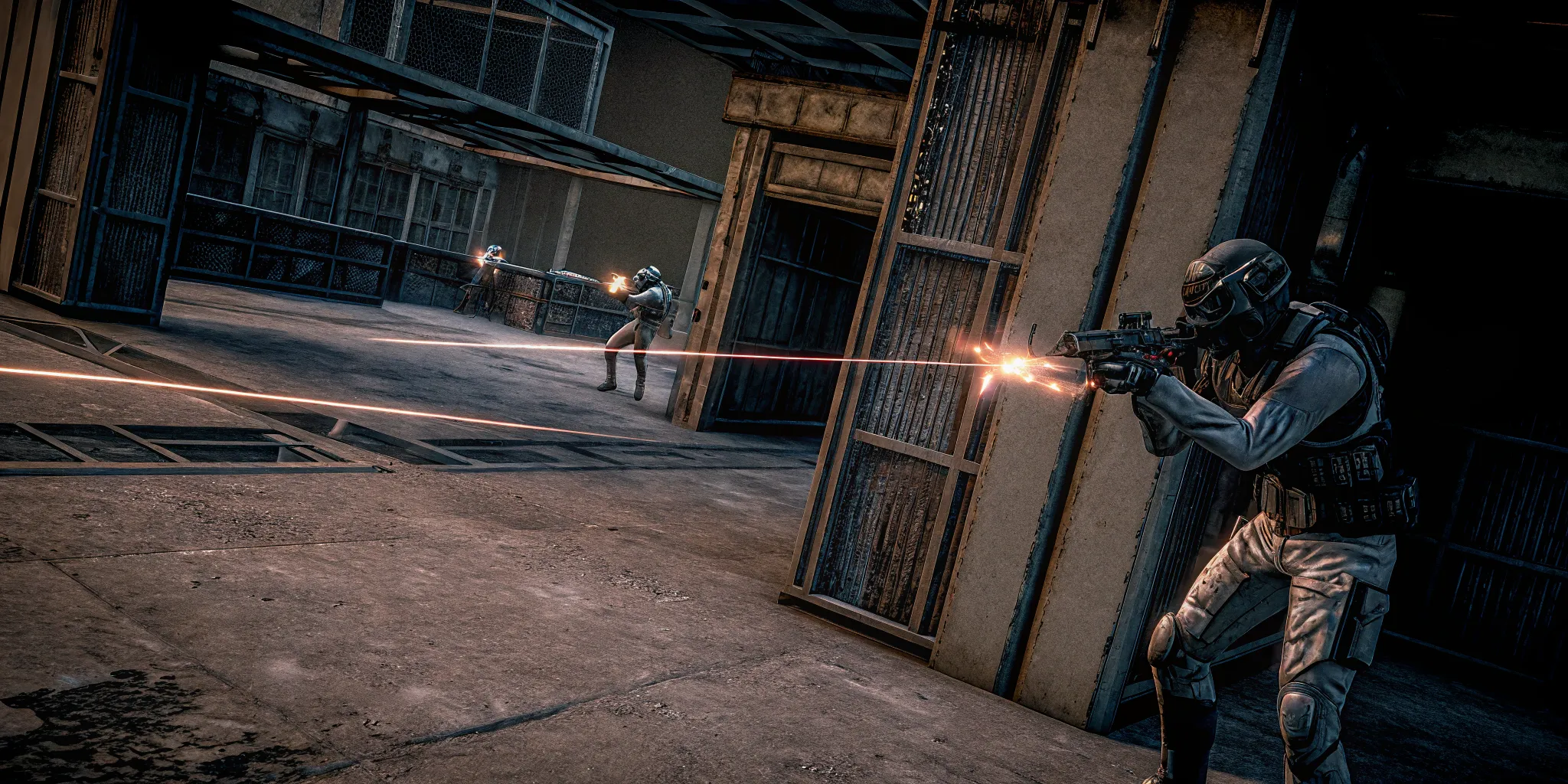
Gaming with friends has always been about shared experiences, from split-screen competitions on the couch to online squad battles across the globe. But what if you could be in the same physical space, fighting back-to-back against a common enemy? That's the promise of free-roam VR. It takes the concept of a vr shooter game and turns it into a real-world team adventure where communication and movement are key. You can see your friends, hear their shouts, and coordinate your tactics in real-time without being tethered to a console. It's the ultimate social activity, blending the thrill of a video game with the high-energy fun of a group outing.
Key Takeaways
- VR Is a Full-Body Sport: Forget sitting on the couch—VR shooters demand you physically duck, lean, and aim. This transforms gameplay from a passive hobby into an active, immersive experience that relies on your real-world movements and instincts.
- Choose Your Ideal Battlefield: You have options for how you want to play. You can build a personal setup at home with accessible headsets like the Meta Quest, or go for the ultimate, hassle-free experience at a free-roam VR arcade that provides all the top-tier equipment.
- Smart Tactics and Comfort Settings Win the Game: Success isn't just about quick reflexes. The best players use strategic communication and their physical environment to their advantage, while also customizing in-game settings to ensure a comfortable, nausea-free experience.
What Makes VR Shooters a Whole New Game?
If you grew up playing first-person shooters, you know the drill: you're glued to a chair, your eyes are fixed on a screen, and your hands are flying across a keyboard or controller. It's fun, but you're always an outsider looking in. VR shooters completely flip that script. Instead of just controlling a character, you become the character. This isn't just a visual upgrade; it's a fundamental shift in how you experience the game, transforming it from a passive activity into a full-body, adrenaline-pumping adventure.
The future of PC gaming is leaning heavily into this immersive reality. In a VR shooter, the game world isn't confined to a rectangle in front of you—it's all around you. You're not just pressing a button to duck; you're physically dropping to your knees to get behind cover. You're not clicking to reload; you're reaching for a new magazine and slamming it into your weapon. Every action feels more intuitive, more challenging, and infinitely more rewarding. This level of immersion engages your senses and instincts in a way that flat-screen games simply can't replicate, making every firefight feel incredibly real.
Move Your Body, Not Just Your Thumbs
The biggest game-changer in VR shooters is that your body is the controller. Forget about memorizing key binds to lean around a corner or jump over an obstacle. In VR, you just… do it. You physically peek your head around a wall to scout for enemies or duck behind a crate to avoid incoming fire. This natural movement makes the experience feel incredibly intuitive, as your real-world actions translate directly into the game. It's a workout and a game all in one, forcing you to be aware of your physical space and use it to your advantage. You'll find yourself flinching and reacting instinctively, creating a level of physical immersion that makes your heart pound.
Aim and Reload Like You're Really There
Aiming in a traditional shooter is about pointing a crosshair. In VR, it's about skill and stability. You physically raise your controller, look down the virtual iron sights, and line up your shot just as you would with a real firearm. There's no aim assist to lean on—your accuracy depends entirely on your steady hand. The realism gets even better when you run out of ammo. You have to perform the manual actions of reloading: ejecting the empty magazine, grabbing a fresh one from your hip or chest rig, and inserting it into your weapon. This process adds a thrilling layer of tension to firefights, as fumbling a reload under pressure can mean the difference between victory and defeat.
Interact With Your Environment
VR game worlds are more than just pretty backdrops; they're interactive sandboxes. You can reach out and physically open doors, pick up objects to use as makeshift cover, or grab a keycard to access a new area. This ability to manipulate your surroundings makes the environment feel tangible and alive. Instead of just running through a static level, you're constantly engaging with it, which opens up new strategic possibilities. Need to get the drop on an enemy? Maybe you can throw a bottle to create a distraction or use a nearby lever to change the layout of the room. This level of environmental interaction makes you feel truly present in the game world.
Feel the Action with Haptic Feedback
It's one thing to see and hear an explosion, but it's another thing entirely to feel it. Modern VR controllers use sophisticated haptic feedback to translate in-game actions into physical sensations. When you fire a weapon, you'll feel the satisfying kick of recoil in your hands. When an enemy lands a shot, a jolt in your vest or controller lets you know you've been hit. This sensory feedback grounds you in the virtual world, making every action more impactful. The right haptic technology makes the gunplay feel incredibly satisfying and heightens the stakes of every encounter, connecting your physical self to your virtual avatar.
Put Your Tactics to the Test
Because VR shooters are so grounded in reality, they demand a higher level of strategic thinking. You can't just run and gun; you have to use your environment and your body to outsmart your opponents. The slower, more deliberate pace of many VR shooters allows you to make well-thought-out tactical decisions. You can use hand signals to coordinate with your teammates without saying a word, physically lean out from cover to take a quick shot, or blind-fire over a wall to suppress an enemy. It's a true test of your spatial awareness and combat instincts, rewarding clever plays just as much as a quick trigger finger.
What Gear Do You Need to Play?
Diving into the world of VR shooters is an incredible thrill, but your experience is only as good as the gear you're using. While you can always jump straight into a premium, free-roam adventure at a place like Zero Latency VR where all the equipment is provided, building your own at-home setup is a rewarding project that gives you endless access to virtual worlds. The centerpiece of any setup is the headset, which acts as your portal to the game. Headsets fall into a few main categories: standalone units that work all on their own, PC-VR headsets that connect to a powerful computer for top-tier graphics, and console-based systems that pair with your favorite gaming machine.
Choosing the right gear depends on your budget, the space you have available, and the types of games you want to play. A standalone headset offers incredible freedom and is easy to set up, making it a fantastic starting point. If you're a PC gamer who craves the highest visual fidelity and performance, a tethered headset might be your best bet. And if you're already part of a console ecosystem, there are amazing options that integrate seamlessly with the hardware you own. Let's walk through some of the most popular choices to help you find the perfect fit for your virtual warfare arsenal.
Meta Quest 2 & 3
If you're looking for the easiest entry point into VR, the Meta Quest lineup is tough to beat. These are standalone headsets, meaning you don't need a PC or console to play—just charge it up, clear some space, and you're good to go. The Quest 3 features significant upgrades over its predecessor, boasting a higher resolution of 2064x2208 per eye compared to the Quest 2's 1832x1920. Thanks to its powerful Snapdragon XR2 Gen 2 processor, the Quest 3 also delivers double the graphics performance, which means sharper visuals and faster load times. Both headsets are fantastic, but if you want the best possible standalone experience, the Quest 3 specs make it a clear winner for immersive, wire-free gaming.
Valve Index
For PC gamers who want a top-of-the-line, immersive experience, the Valve Index is a legendary piece of kit. It's known for its exceptional visual quality, with a resolution of 1440x1600 per eye and a refresh rate that can go up to 144Hz, making gameplay feel incredibly smooth and realistic. What really sets the Index apart, though, are its innovative controllers. They track the movement of each of your fingers, allowing for a level of hand presence and interaction that few other systems can match. Whether you're gripping a weapon, giving a thumbs-up to a teammate, or just waving hello, the Index makes your hands feel like they're truly in the game.
HTC Vive
The HTC Vive was one of the pioneers of room-scale VR, and it remains a solid choice for players who want to physically move around in their virtual environment. With a resolution of 1080x1200 per eye and a 90Hz refresh rate, it delivers a robust and engaging experience. The Vive's tracking system is designed to let you walk, duck, and dodge within a designated play area, making shooter games feel incredibly dynamic and active. It also supports a huge ecosystem of games and accessories, giving you plenty of options to customize and expand your setup over time. If you have the physical space to dedicate to VR, the Vive offers a fantastic way to get your whole body into the game.
PlayStation VR2
If you're a PlayStation 5 owner, the PlayStation VR2 is the ultimate accessory for diving into virtual reality. Designed exclusively for the PS5, this headset delivers a stunning visual experience with a 4K HDR display, offering a resolution of 2000x2040 per eye and a smooth 120Hz refresh rate. But the real magic is in the immersion. The PSVR2 features advanced haptic feedback in the headset itself and adaptive triggers in its Sense controllers, letting you feel everything from the recoil of your weapon to the subtle tension of drawing a bowstring. It's a brilliantly integrated system that leverages the power of the PS5 to create deeply compelling and sensory-rich gaming experiences.
PC Specs for a Flawless Experience
For PC-VR headsets like the Valve Index or HTC Vive, your computer is doing all the heavy lifting. To ensure your games run smoothly without stuttering or lag, you'll need a powerful rig. While specific PC VR requirements can vary by game, a good baseline is a graphics card like the NVIDIA GeForce RTX 3060 or AMD Radeon RX 6700 XT. You'll also want at least 16GB of RAM and a capable processor, such as an Intel i5 or AMD Ryzen 5. These components work together to render the complex, high-resolution images needed for VR at a high frame rate, which is essential for both performance and preventing motion sickness. Investing in a solid PC is key to unlocking the full potential of your VR headset.
Must-Have Accessories
Once you have your headset, a few key accessories can seriously improve your comfort and immersion. A sturdy stand keeps your headset safe and your lenses protected when you're not playing. For more active games, a comfortable VR mat can help you stay centered in your play space and reduce fatigue. High-quality headphones are also a game-changer, as they provide the spatial audio cues that make you feel like you're truly inside the game world. Finally, a silicone or cloth VR cover is one of the most essential VR accessories, as it keeps your headset clean and makes it more comfortable to wear during long gaming sessions, especially when you're sharing with friends.
The Best VR Shooters for Every Player
The world of VR shooters is incredibly diverse, offering something for every type of player. It's not just about pointing and shooting; it's about how you want to experience the action. Are you a lone wolf who loves a deep, immersive story? Or do you thrive on the adrenaline of fast-paced competition against other players? Maybe you're a strategist who excels at coordinating with a team to complete a mission.
Whatever your style, there's a VR shooter that will feel like it was made just for you. From terrifying zombie apocalypses that will get your heart racing to vibrant, music-fueled arenas that feel like a dance party with guns, the options are nearly endless. We've broken down some of the best games into categories to help you find your next virtual obsession. Whether you're looking to explore a haunting, mysterious world on your own or squad up with friends for a tactical takedown, your perfect VR adventure is waiting.
Epic Single-Player Campaigns
If you love getting lost in a good story and exploring rich, detailed worlds at your own pace, a single-player campaign is for you. These games focus on atmosphere, narrative, and solo challenges. One of the standout titles in this category is "Into the Radius," a game that drops you into a hauntingly atmospheric world filled with bizarre anomalies and hidden dangers. It's a survival shooter that rewards methodical exploration and careful planning, making every step you take feel meaningful. Many players consider it one of the best shooter games on VR for its unique blend of tension and discovery.
Competitive Multiplayer Arenas
For those with a competitive streak, nothing beats the thrill of testing your skills against other players. Multiplayer arenas are all about fast reflexes, sharp aim, and outsmarting your opponents. "Pavlov" is a must-play, often called the "Counter-Strike" of VR for its realistic weapon handling and intense, skill-based matches. It also has a massive library of user-generated content, so you'll never run out of maps and modes to try. Another fantastic option is "Contractors," which delivers a smooth, fast-paced experience that feels like a classic "Call of Duty" match brought to life in VR. The gameplay is satisfying and perfect for jumping into quick, action-packed rounds.
Cooperative, Squad-Based Missions
Sometimes, it's more fun to have your friends' backs. Co-op shooters are built around teamwork, communication, and strategy. In these games, you and your squad will work together to overcome challenges you could never face alone. For a dose of realism, check out "Ghosts of Tabor," an extraction shooter where you and your team must loot, survive, and escape high-stakes environments. If you prefer a more tactical approach, "Breachers" offers a "Rainbow Six Siege"-style experience, where one team plans a strategic assault while the other defends. Success in these VR tactical shooters depends entirely on how well your team works together.
Heart-Pounding Horror Shooters
If you like your action with a side of adrenaline, horror shooters in VR are an unforgettable experience. The immersion of virtual reality makes every jump scare and tense moment feel incredibly real. A classic in this genre is "Arizona Sunshine," which throws you into a sun-scorched, post-apocalyptic world filled with zombies. Managing your ammo and keeping your cool while fending off hordes of the undead is a true test of nerve. For a cooperative thrill, "After the Fall" lets you team up with friends to take on massive, mutated zombies in a frozen wasteland, combining tense horror with exciting team-based action.
High-Energy Arcade and Rhythm Shooters
Not all shooters have to be serious and tactical. This category is all about pure, unadulterated fun, blending shooting with other exciting mechanics. "Pistol Whip" is a standout, turning you into an action hero in a vibrant, music-driven world. You'll shoot, dodge, and weave through levels synchronized to an incredible soundtrack, making you feel like you're in the middle of a movie scene. For something with more competitive flair, "Hyper Dash" offers lightning-fast multiplayer action. You'll use dashes, sprints, and rail grinding to move around the arena at high speeds, creating a dynamic and energetic shooter that's an absolute blast to play.
Where to Get the Ultimate VR Experience
While a home setup is fantastic, nothing compares to the sheer scale and immersion of a dedicated VR arcade. These venues offer warehouse-sized arenas, advanced haptic gear, and perfectly calibrated systems that let you and your friends move freely through the virtual world together. It's the difference between watching a movie on your laptop and seeing it in a premium theater. If you want to play VR shooters at their absolute peak, these are the places to go.
Zero Latency VR - Austin
This is where you go when you want to forget you're playing a game and just live in another world. Zero Latency VR - Austin specializes in free-roam, warehouse-scale experiences where you aren't tied to a single spot. You and up to seven friends can physically walk, run, and explore a massive game space together, all while wearing state-of-the-art wireless gear. It's an incredibly social and immersive way to play, making it perfect for birthday parties, team-building events, or just an unforgettable night out. Their library of games, including intense shooters, ensures there's an adventure waiting for every type of player.
Sandbox VR
Sandbox VR takes immersion to the next level by making you feel like the star of your own action movie. Their experiences use full-body motion capture, so your every move is tracked in the game, along with haptic vests that let you feel every impact. After your game, you even get a mixed-reality video of your team in action, which is a fantastic keepsake. While they offer a variety of genres, their sci-fi and zombie shooters are particularly thrilling. It's a highly cinematic and story-driven take on group VR that focuses on making your team the heroes of an epic virtual adventure.
VR World
Think of VR World as a theme park for virtual reality. Located in major cities, it's a massive venue that offers a huge variety of VR experiences all under one roof. You can hop from a competitive shooter to a creative art application, then try a mind-bending puzzle game. This is a great option if your group has diverse interests or if you want to sample a wide range of what VR has to offer beyond just shooters. While it may not have the same warehouse-scale free-roam space as other venues, its sheer catalog of games and experiences is hard to beat for a full day of fun.
Virtuix Omni
If you've ever wanted to physically run across a virtual battlefield, the Virtuix Omni is the technology that makes it happen. This isn't a specific venue, but an omnidirectional treadmill that lets you walk and run in any direction inside the game. It solves the challenge of locomotion in VR, allowing for a level of physical engagement that's incredibly intense and immersive. You can find these treadmills at select VR arcades across the country. It's a fantastic way to get a workout while you play and adds a layer of realism to shooters that you have to feel to believe. You can find a location with an Omni arena to try it for yourself.
How to Sharpen Your VR Shooting Skills
Jumping into a VR shooter is an incredible rush, but becoming a top player takes a little practice. It's not just about having a quick trigger finger; it's about using your body, your brain, and your gear to your advantage. These tips will help you move from a rookie recruit to a seasoned veteran, ready to dominate any virtual battlefield.
Master Your Movement
In VR, you are the controller. The best players use their whole body to gain an edge. Instead of just standing still, practice physically crouching behind cover, leaning around corners to peek at enemies, and sidestepping to dodge incoming fire. VR tactical shooters feel so immersive because your real-world actions translate directly into the game. In a free-roam environment like Zero Latency, this becomes even more critical. Get comfortable with the physical space you have, and always be aware of your surroundings, both in-game and out. The more you can make movement a natural reflex, the faster you'll be able to react when things get intense.
Develop Winning Combat Strategies
Running in guns blazing is fun, but a solid strategy will win the match. Before you engage, take a second to assess the situation. Where is the cover? Where are your teammates? What's the objective? In cooperative games, communication is everything. Use your mic to call out enemy positions, coordinate attacks, and let your squad know when you're reloading. Even in faster-paced games, taking a moment to think through your next move can make all the difference. A well-thought-out tactical decision is often more powerful than a dozen missed shots.
Tips to Avoid Motion Sickness
Feeling a bit queasy? It's a common experience for many VR users, often called simulation sickness. The good news is that you can usually overcome it. Start with shorter play sessions—maybe 15 to 20 minutes—and take breaks in between. Many games have comfort settings, like teleportation movement instead of smooth locomotion, which can help a lot. Make sure you're hydrated and that the headset fits snugly but comfortably on your head. If you start to feel dizzy or nauseous, it's best to stop and take a break. Your brain will adapt over time, and soon you'll be able to enjoy longer, more intense gaming sessions.
Set Up Your Gear for Success
A great performance starts with a great setup. Before you dive in, make sure your play area is clear of any obstacles you could trip over. A clear space means you can move freely and confidently without worrying about bumping into furniture. Also, check that your headset is fitted properly—it should be secure and the image should be clear. A blurry or shaky view can not only hurt your performance but also contribute to motion sickness. Ensuring your hardware provides consistent frame rates is key to a comfortable experience, so make sure your system is up to the task.
Customize Settings for Maximum Comfort
Don't just accept the default settings. Spend a few minutes in the game's options menu to tailor the experience to your preferences. You can often adjust everything from controller sensitivity and audio levels to graphic details and comfort options. If the controls feel awkward or the sound is distracting, you won't be able to play your best. Understanding the challenges of VR gaming from a player's perspective often starts with personalizing the setup. Fine-tuning these settings can make the game feel more intuitive and comfortable, allowing you to focus completely on the action and play for longer without frustration.
What to Look For in a Top-Tier VR Shooter
Not all VR shooters are created equal. With so many titles out there, it can be tough to figure out which ones are worth your time and which will just leave you feeling frustrated (and maybe a little dizzy). A truly great VR shooter goes beyond just pointing and shooting; it pulls you into its world and makes you feel like you're right there in the middle of the action. The best games nail a few key elements that separate them from the rest of the pack. From stunning visuals that make you forget you're wearing a headset to controls that feel like a natural extension of your body, these are the features that define a top-tier experience. When you're ready to gear up, keep an eye out for these essential qualities.
Immersive Graphics and Visuals
The first thing you'll notice in any game is how it looks, and in VR, visuals are everything. You want a game that delivers an "adrenaline-packed experience with realistic graphics and dynamic gameplay that fully leverage VR technology." Forget blocky, cartoonish worlds; the best shooters use high-fidelity graphics to create environments that feel real and lived-in. This isn't just about looking pretty—it's about believability. When a laser blast whizzes past your head or you're taking cover behind a crumbling wall, convincing visuals make the stakes feel higher and the action more intense. Great graphics are the foundation of virtual reality immersion, making it easier to suspend your disbelief and get lost in the game.
Intuitive Controls and Handling
Nothing pulls you out of a VR experience faster than clunky, confusing controls. The best games feature intuitive movement and handling that feel second nature. You shouldn't have to fight with the controls to reload your weapon or duck behind cover. A great example is Contractors VR, which "features easier movement mechanics compared to other hardcore VR games, rewarding player skill while remaining accessible." This balance is key. The controls should be easy enough for a beginner to pick up quickly but deep enough to allow skilled players to shine. When aiming, shooting, and moving feel fluid and responsive, you can focus on your strategy and reflexes instead of fumbling with buttons.
Cross-Platform Compatibility
Want to squad up with your friends? Then you'll need a game that everyone can play. Cross-platform compatibility is a huge plus because it means you can connect with players regardless of which VR headset they own. Games like Pavlov, which "is available on most VR platforms," have a much larger and more active community. This not only makes it easier to play with friends but also reduces matchmaking times for online games. A bigger player base keeps the game alive and thriving long after its release, ensuring you'll always have someone to team up with or compete against.
Regular Updates and Active Development
The best VR shooters are living, evolving experiences. Look for games that receive regular updates, new content, and bug fixes. An active development team shows that the developers are committed to improving the game and listening to the community. This ongoing support means you'll get new maps, weapons, and features to keep the experience fresh and exciting every time you play.
The Future of VR Shooting Games
VR shooting games are just getting started. As the technology continues to evolve, we're seeing incredible advancements that are making virtual warfare more realistic and accessible than ever before. From improved haptic feedback that lets you feel every bullet impact to AI-powered opponents that adapt to your play style, the future of VR shooters is incredibly bright.
One of the most exciting developments is the rise of mixed reality experiences, where virtual elements are seamlessly blended with the real world. Imagine ducking behind your actual couch to avoid enemy fire, or using real objects in your room as weapons and cover. This technology is still in its early stages, but it promises to blur the line between reality and virtual reality even further.
Cloud gaming is also set to revolutionize VR shooters. Instead of needing a powerful PC or console, you'll be able to stream high-quality games directly to your headset, opening up premium VR experiences to a much wider audience. This means that anyone with a decent internet connection will be able to enjoy the same level of graphics and performance that was previously reserved for high-end gaming rigs.
Frequently Asked Questions
What VR headset is best for shooting games?
For beginners, the Meta Quest 3 offers the best balance of accessibility and performance. For PC gamers wanting the ultimate experience, the Valve Index provides exceptional tracking and visual quality. PlayStation 5 owners should consider the PSVR2 for its seamless integration and haptic feedback.
Do VR shooters require a lot of physical space?
Most VR shooters can be played in a 6x6 foot area, but more space allows for greater immersion. For the ultimate experience, free-roam VR arcades like Zero Latency offer warehouse-scale gameplay where you can physically walk around large environments.
Can VR shooters make you motion sick?
Some people experience motion sickness initially, but it usually improves with time. Start with shorter sessions, use comfort settings like teleportation movement, and take breaks when needed. Most players adapt quickly and can enjoy longer sessions without issues.
Are VR shooters suitable for all ages?
VR shooters range from family-friendly arcade games to mature-rated titles. Always check the game's rating and content warnings. Many VR arcades offer age-appropriate experiences and can recommend suitable games for younger players.
How realistic are VR shooters compared to traditional games?
VR shooters offer unprecedented realism through full-body movement, manual reloading, and physical aiming. You'll duck behind real cover, physically reload weapons, and use your entire body to play. The immersion level is far beyond traditional flat-screen gaming.