
Virtual Reality Simulation: A Complete Guide
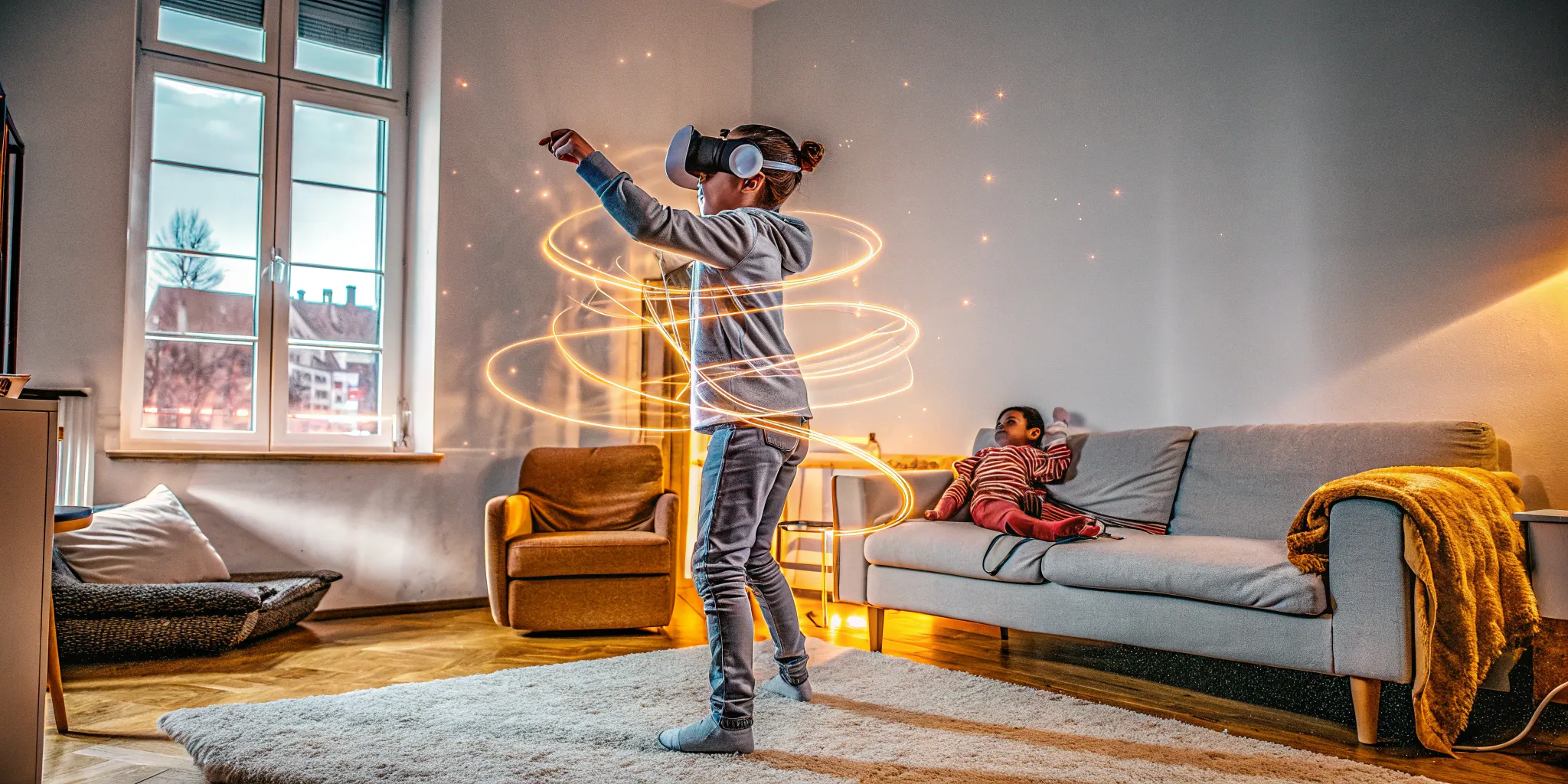
Finding a new and genuinely exciting activity for a group can be a challenge. You want something that gets everyone involved, talking, and creating shared memories. A virtual reality simulation offers a unique solution, especially in a free-roam environment where you can move and interact together. It's not a solo activity on a couch; it's a collaborative adventure that requires teamwork and communication. Whether you're planning a birthday party, a corporate team-building event, or just a fun night out with friends, VR drops your entire group into the heart of the action. It's an active, social, and unforgettable experience that gives you a great story to tell afterward.
Key Takeaways
- VR Creates Powerful Muscle Memory: By letting you learn through action, VR simulations help you retain skills more effectively, whether you're mastering a game or practicing a complex real-world task.
- True Immersion Relies on Seamless Technology: The feeling of being completely present in a virtual world depends on high-performance hardware—from the headset to the motion tracking—working in perfect sync to trick your senses.
- You Don't Need Your Own Rig to Play: The best way to experience high-end, free-roam VR is often at a dedicated venue, which removes the barriers of cost and technical setup so you can focus purely on the fun.
What Exactly Is a VR Simulation?
Ever wondered what it would feel like to step inside a video game or walk on a different planet? That's the magic of a virtual reality (VR) simulation. It's a completely digital, computer-generated environment designed to be so immersive that your brain believes you're actually there. Using a headset and other gear, you can look around, move, and interact with this virtual world as if it were real.
Unlike augmented reality (AR), which overlays digital elements onto your real-world view (like Pokémon GO), VR completely replaces your surroundings. It's a full-sensory experience that transports you to new places, whether you're battling zombies with friends, exploring the ruins of an ancient city, or practicing a complex skill. The goal is to create a believable, interactive space where you can play, learn, and explore without limits.
The Building Blocks of a Virtual World
So, what goes into creating these digital dimensions? At their core, VR simulations are detailed, custom virtual worlds built with specific goals in mind. For us at Zero Latency VR, that goal is maximum fun and immersion. For others, it might be creating a safe, controlled space to practice complex surgery or test a new product design without real-world costs or consequences. The key is that these worlds are interactive. They aren't just static images; they are dynamic environments that respond to your actions, making the experience feel authentic and engaging.
How Does It All Work?
The secret sauce of VR is its ability to trick your senses. When you put on a VR headset, it blocks out the real world and fills your field of vision with a computer-generated 3D world. As you turn your head, motion sensors track your movements and adjust the image in real-time, creating a seamless sense of presence. This is what makes you feel like you're truly in the game. This technology allows you to do things that would be impossible or dangerous in real life, like fighting off a robot invasion or navigating a maze suspended in the sky, all from the safety of the game space.
Different Kinds of VR Simulations
While we're all about entertainment and gaming, VR simulation is used in a surprising number of fields. Businesses use it for hands-on training, allowing employees to practice operating heavy machinery or handle difficult customer service scenarios. In education, students can take virtual field trips to historical sites or explore the human body from the inside. VR is also making huge waves in various industries, from healthcare, where surgeons can rehearse procedures, to architecture, where clients can walk through a building before it's even built. It's a powerful tool with applications as vast as the virtual worlds it can create.
The Tech That Makes VR Possible
Ever wonder what magic goes into creating a virtual world that feels so real you forget you're wearing a headset? It's not just one thing, but a symphony of incredible technologies working together. From the screen in front of your eyes to the sensors tracking your every step, each component plays a vital role in tricking your brain into believing you're somewhere else entirely. This powerful combination of hardware and software is what transforms an empty room into a zombie-infested city or an alien planet.
Understanding these core components helps you appreciate the experience even more. It's the seamless integration of high-definition visuals, responsive motion tracking, and sensory feedback that makes modern VR so compelling. When you duck to dodge an incoming projectile or feel the rumble of your weapon, it's because these systems are perfectly in sync. This isn't just about seeing a different world; it's about feeling like you are physically present within it. The goal is to achieve what's known as "presence"—that deep, psychological sense of being in the virtual environment. Let's break down the key pieces of virtual reality technology that make these immersive simulations possible.
Headsets and Displays
The most recognizable piece of VR gear is the headset, or Head-Mounted Display (HMD). Think of it as your personal portal into the virtual world. Inside the headset are two high-resolution screens—one for each eye—that display a stereoscopic 3D image. This is what creates the incredible sense of depth and scale. But it's not just a static screen; the headset also contains sensors that track your head movements. When you look up, down, or side-to-side in real life, your view in the virtual world changes instantly and smoothly. This one-to-one tracking is essential for making the experience feel natural and preventing motion sickness.
Motion Tracking Systems
This is where the "free-roam" part of VR comes to life. Motion tracking systems are what allow your real-world movements to be translated into the game. Using a combination of cameras and sensors placed in the environment and on your gear, the system follows your body's position and actions. When you walk, run, crouch, or jump, your in-game avatar does the same thing in real-time. This technology is what separates a truly immersive, untethered experience from a stationary one. It's the reason you can physically explore your virtual surroundings and interact with the world as you would in reality.
Haptic Feedback Devices
VR engages your eyes and ears, but what about your sense of touch? That's where haptic feedback comes in. These devices use vibrations, resistance, and other physical sensations to simulate touch within the virtual world. For example, the controller you're holding might vibrate to mimic the recoil of a weapon or the impact of an explosion. Some advanced systems even use full-body suits to provide sensations across your entire body. By adding a tactile layer to the experience, haptic technology makes the simulation feel much more grounded and believable, pulling you deeper into the action.
Graphics and Physics Engines
Behind all the hardware is the powerful software that builds and runs the virtual world. Graphics engines are the tools used to create the stunning, computer-generated 3D environments you see. They handle everything from the lighting and textures to the character models and special effects. Alongside them, physics engines ensure the world behaves according to consistent rules. They dictate how gravity works, how objects collide, and how characters move. Together, these game engines are the digital architects and engineers responsible for creating a virtual space that is not only beautiful but also interactive and believable.
Where Is VR Simulation Used Today?
Virtual reality has moved far beyond the world of gaming. While immersive entertainment is still a huge part of what makes VR so exciting, the technology is now a powerful tool in a surprising number of fields. From training surgeons to designing cars, VR simulations are changing how we learn, work, and even heal. It provides a safe, controlled, and cost-effective way to practice complex skills and experience scenarios that would be difficult or impossible to replicate in the real world. Let's look at some of the key areas where VR is making a real impact.
Healthcare and Medical Training
In the high-stakes world of medicine, there's no room for error. That's why VR is becoming an essential tool for training healthcare professionals. Surgeons can practice complex operations, and first responders can run through emergency scenarios, all without any risk to a real patient. Platforms for virtual reality medical simulation allow doctors and nurses to interact with lifelike patient avatars, helping them develop critical skills and improve their performance under pressure. This kind of hands-on practice helps build muscle memory and confidence, leading to better outcomes when it matters most. It's a safe and effective way to ensure medical teams are prepared for anything.
Education and Learning
Imagine taking a field trip to ancient Rome or exploring the surface of Mars without ever leaving the classroom. VR is making these kinds of immersive learning experiences a reality. It transforms abstract concepts into tangible, interactive lessons that capture students' attention and help them retain information. By enhancing education with VR simulations, teachers can create dynamic environments for subjects ranging from science and history to engineering. Students aren't just reading about a topic; they're experiencing it firsthand. This active approach to learning helps develop critical thinking and problem-solving skills in a way that traditional methods simply can't match.
Military and Defense
The military was one of the earliest adopters of VR technology, using it for flight simulators decades ago. Today, its applications are even more advanced. Soldiers use VR to practice everything from combat drills to tactical planning in realistic, yet completely safe, environments. These virtual reality simulations can replicate different terrains, weather conditions, and complex scenarios that would be too dangerous or expensive to set up in the real world. This allows personnel to hone their skills, improve teamwork, and prepare for high-pressure situations, ensuring they are ready for any challenge they might face on a mission.
Manufacturing and Engineering
Before a new car is built or a factory floor is designed, engineers and designers can walk through a full-scale virtual model of it. VR allows them to interact with virtual prototypes, test for design flaws, and optimize workflows long before any physical construction begins. This saves an incredible amount of time and money by catching potential issues early in the process. Companies can use VR to simulate assembly lines, train workers on new machinery, and refine their processes for maximum efficiency. It's a game-changer for innovation, allowing teams to visualize and perfect their creations in a digital space.
Entertainment and Gaming
Of course, VR continues to push the boundaries of entertainment. It's one thing to play a game on a screen, but it's another to be fully inside it. Free-roam virtual reality simulators like the ones we have at Zero Latency VR - Austin drop you and your friends directly into the action. Whether you're fighting off zombies, exploring a fantasy world, or competing in a futuristic sport, the immersion is total. You can physically walk, run, and interact with the environment, making the experience feel incredibly real. It's a social, active, and unforgettable way to have fun and create lasting memories with your team.
Therapy and Wellness
VR is also emerging as a powerful tool in therapy and wellness. For people dealing with phobias, such as a fear of heights or public speaking, VR offers a safe and controlled way to face their fears through exposure therapy. It's also being used for pain management, with studies showing it can significantly reduce discomfort during medical procedures by distracting the brain. In the wellness space, VR provides guided meditations in serene, virtual landscapes, helping people reduce stress and find a sense of calm. This technology is opening up new, accessible avenues for mental and physical well-being.
Why Is VR Simulation So Effective?
Virtual reality is more than just a fun escape; it's a powerful tool that taps directly into how our brains learn and process information. The magic lies in its ability to create a sense of "presence"—the feeling that you are truly inside the virtual environment. This immersion tricks your brain into responding as if the experience were real, making the lessons learned and the memories formed incredibly potent. When your senses are fully engaged, your focus sharpens, and distractions from the outside world melt away. This deep level of engagement is something that traditional learning methods struggle to achieve.
Unlike passively watching a video or reading a manual, VR demands your active participation. You aren't just observing a scenario; you're a character within it, making decisions and taking actions that have immediate consequences. This hands-on approach is what makes VR simulation so effective for everything from corporate training and medical education to mastering a new game with your friends. It bypasses abstract concepts and gets straight to the practical application, creating a deeper, more lasting impact. Let's explore the key reasons why this technology is such a game-changer.
Learn Faster and Remember More
When you're fully immersed in a virtual environment, your brain is more engaged, which helps you learn new skills and retain information more effectively. Instead of just reading instructions, VR puts you directly into the situation, allowing you to learn by doing. This kind of experiential learning creates stronger neural pathways, making it easier to recall what you've learned later on. Think about it: you're more likely to remember how to solve a complex puzzle when you've physically manipulated the pieces yourself, even in a virtual world, than if you just watched someone else do it. This active involvement makes the entire process more memorable and impactful.
Practice in a Safe Environment
One of the biggest advantages of VR simulation is the ability to practice complex or dangerous tasks in a completely safe setting. For professionals in fields like aviation, healthcare, or the military, VR provides a space to make mistakes without any real-world consequences. A surgeon can practice a delicate procedure, or a pilot can handle an engine failure, all without putting anyone at risk. This freedom to fail and try again builds confidence and competence. It allows you to hone your skills through repetition in a controlled environment, ensuring you're fully prepared when you face the real thing.
Save on Costs
While the initial setup for VR can seem like a significant investment, it often leads to substantial long-term savings. Traditional training programs can be expensive, requiring physical materials, travel for trainees, and the use of costly equipment. VR simulation reduces or eliminates many of these expenses. For example, instead of using a multi-million dollar flight simulator, pilots can get valuable practice time in a VR headset. Companies can also avoid the costs associated with operational downtime or material waste during training. Over time, the return on investment from using VR for training and development becomes incredibly clear.
Get Instant Feedback
In a VR simulation, every action can be tracked, measured, and analyzed. This creates an opportunity for immediate, data-driven feedback that is difficult to replicate in traditional training. The system can tell you exactly where you went wrong, how you can improve your technique, or how quickly you responded to a challenge. This real-time feedback loop accelerates the learning process, allowing you to make adjustments on the fly and perfect your skills much faster. It's like having a personal coach guiding you every step of the way, offering personalized insights to help you perform at your best.
Connect with Others
VR is not just a solo experience; it's a powerful platform for collaboration and social interaction. Multi-user simulations allow teams to train together, solve problems, and practice communication in a shared virtual space, even if they are physically located on opposite sides of the world. This is perfect for team-building exercises or practicing coordinated responses to emergency situations. For gamers, it means sharing an adventure with friends in a way that feels incredibly real and connected. These collaborative VR experiences build teamwork and create shared memories, making the simulation both effective and engaging.
What to Know Before You Start
Jumping into a virtual world is an incredible experience, but a little preparation goes a long way. Whether you're setting up a system at home or visiting a VR arcade for the first time, knowing what to expect can make your adventure much smoother and more enjoyable. Think of it like stretching before a workout—a few simple steps can ensure you have the best possible time. From making sure the technology can keep up with you to creating a safe space to play, here are the key things to consider before you put on the headset.
Performance Needs
The magic of VR is its ability to make you feel completely present in another world. This feeling, often called presence, depends heavily on performance. For a simulation to be believable, it needs powerful hardware and software working together seamlessly. High-resolution displays ensure the world looks crisp and real, while precise motion tracking translates your movements into the game without any frustrating delays. When the performance is poor, you might notice lag or blurry graphics, which can quickly break the illusion and even cause motion sickness. That's why professional VR venues invest in top-tier equipment—to make sure your virtual experience feels as real as possible.
Setting Up Your Space Safely
One of the best parts of VR is the freedom to move around, but it's important to make sure your real-world space is safe first. Before you start, clear the area of any furniture, pets, or other obstacles you could trip over. If you're playing at home, use your system's built-in boundary feature (often called a guardian or chaperone) to set a safe perimeter. This creates a virtual wall that appears when you get too close to a real one. At a free-roam VR arena like Zero Latency, the entire space is designed for safe movement, so you can focus on the game without worrying about bumping into the coffee table.
Keeping It Comfortable
Comfort is key to a great VR session. Start by adjusting your headset so it fits snugly but isn't too tight. The image should be clear and focused—if it's blurry, you may need to adjust the lens spacing or the headset's position on your face. It's also a good idea to wear comfortable clothes and shoes, especially for active games. If you start to feel any eye strain or motion sickness, don't be afraid to take a short break. Your brain is adapting to a new experience, and easing into it will help you enjoy longer, more immersive play.
System Maintenance
Like any advanced piece of tech, VR equipment needs a little care to perform its best. For home users, this means keeping your headset lenses clean with a microfiber cloth, ensuring your controllers are charged, and regularly updating your software and game files. Proper headset care prevents smudges that can ruin the visual clarity and ensures everything runs smoothly. This is another area where VR arcades shine—they handle all the technical upkeep, so you can just show up and play without worrying about whether everything is charged and updated.
Internet and Network Needs
If you're planning to play with friends, a solid internet connection is non-negotiable. Multiplayer VR experiences stream a massive amount of data to keep every player synced up in the virtual environment. A slow or unstable connection can cause lag, where your actions or the actions of others are delayed. This can be disorienting and completely pull you out of the experience. For a seamless group adventure, a low-latency connection is critical. This ensures that when you high-five your friend in the game, it happens in real-time, making the shared experience feel authentic and connected.
How to Set Up a VR Simulation
Getting a VR simulation up and running might seem like a huge technical challenge, but it's more straightforward than you think. Whether you're setting up a system at home or designing a professional training program, the process follows a few key steps. Breaking it down makes it manageable and ensures you create an experience that is not only immersive but also safe and effective. Think of it as building a stage for an incredible performance—you need the right props, clear rules for the actors, and a script to follow. Here's how you can get started.
Choose the Right Equipment
Your first step is to select the hardware that will bring your virtual world to life. This includes the VR headset, controllers, and a computer or console powerful enough to run the simulation smoothly. The right gear is essential because it's the foundation for creating detailed, custom virtual worlds where users can fully immerse themselves. Your choice will depend on your goals. For a simple gaming setup, a standalone headset might be perfect. For high-fidelity training simulations, you'll likely need a PC-powered headset with advanced tracking capabilities to ensure a seamless and believable experience.
Establish Safety Rules
Once you have your gear, safety is your top priority. In VR, your mind is in another world, but your body is still in a physical room. It's crucial to clear the area of any obstacles like furniture, pets, or stray cables. Most VR systems have a built-in feature to help you draw a virtual boundary, which warns you if you're getting too close to a wall or object. Establishing these protocols is essential because while VR lets you practice in scenarios without real-world risks, a trip over a coffee table is very real. Make sure everyone using the simulation knows the rules and the layout of the safe play space.
Integrate It Into Your Training
If you're using VR for training or education, think about how it fits into your broader program. VR shouldn't be a one-off novelty; it should be a tool that supports your learning objectives. The good news is that VR can be much faster to set up than traditional hands-on training. It's an excellent way to help people learn to think on their feet and perform well under pressure in a controlled environment. Plan out how the simulation will complement other learning methods, like classroom instruction or practical exercises, to create a well-rounded and impactful training experience.
Develop Your Content
The content is the heart of your VR simulation. This is the game, the experience, or the training module that users will interact with. You can choose from thousands of pre-existing games and applications or develop custom content tailored to specific needs. The beauty of VR is its flexibility; you can create almost any training situation you can imagine, from a zombie apocalypse that builds teamwork to a detailed surgical procedure for medical students. Your content should align directly with your goals, whether that's pure entertainment, skill development, or educational instruction.
Measure Your Performance
One of the most powerful features of VR is the ability to track and measure performance instantly. In a game, this might be your final score, accuracy, or completion time. In a professional training simulation, the data can be much more detailed, tracking every decision and movement. This system of real-time, personalized feedback is invaluable for learning and improvement. It shows users exactly where they excelled and what they need to work on, making the path to mastery clearer and more engaging. Reviewing this data helps you refine the simulation and track progress over time.
What's New in the World of VR?
Virtual reality is always evolving, and it's exciting to see where the technology is headed. While epic gaming experiences are still at the heart of VR, its applications are expanding into almost every industry. The latest advancements are making virtual worlds smarter, more connected, and more impactful than ever before. From artificial intelligence that learns from you to new ways of working with your team, VR is changing how we learn, play, and connect. Let's look at some of the most interesting trends shaping the future of virtual reality.
AI and Machine Learning
Artificial intelligence is making VR simulations incredibly smart and responsive. Instead of interacting with characters that follow a simple script, you can now face opponents and allies that think, react, and adapt to your every move. Developers are using AI and ML algorithms to create more realistic and personal experiences. This means the virtual worlds you explore can change based on your actions, making each playthrough unique. Imagine zombies that learn your tactics or friendly characters that remember your previous conversations. This level of personalization makes the immersion deeper and the challenges much more dynamic.
Remote Collaboration
VR is breaking down the distance between people, and that's a huge deal for teamwork. Companies are now using virtual spaces for everything from daily meetings to complex design reviews. Instead of a flat video call, teams can meet in a shared virtual room, interact with 3D models, and brainstorm on whiteboards as if they were all there in person. This technology is transforming remote collaboration by making it more engaging and effective. The same principles that make cooperative VR games so thrilling—communication, shared goals, and a sense of presence—are now helping teams work together better from anywhere in the world.
Gamification
Gamification is all about applying game-like elements—like points, competition, and storytelling—to non-game activities, and VR is the perfect place for it. Brands and educators are creating narrative-driven experiences that make learning or marketing feel like an adventure. By incorporating gamification elements, they can make training modules more engaging and product demos more memorable. This approach taps into our natural desire for achievement and fun, turning a simple task into a compelling quest. It's a powerful way to hold someone's attention and make a lasting impression.
Training for Soft Skills
One of the most surprising and powerful uses for VR is practicing soft skills. Think about it: where can you safely practice a high-stakes conversation or a public speech? VR provides a risk-free environment to do just that. A study on VR training for soft skills found that it helps people learn faster and build more confidence than traditional methods. You can rehearse a presentation in front of a virtual audience or navigate a difficult negotiation with an AI-powered character. This kind of practice builds muscle memory for social situations, helping people feel more prepared for real-world challenges.
How to Handle Common VR Challenges
Getting started with virtual reality is an exciting prospect, but like any new technology, it comes with a few things to consider. Whether you're thinking about a home setup or planning a group outing, being aware of these common challenges can help you have the best possible experience. Here's a look at what to expect and how to handle it.
Plan for the Initial Cost
Let's be real: getting into high-quality VR isn't always cheap. A powerful headset, a capable computer, and accessories can add up, making the upfront cost a significant factor. While a home setup can be a great long-term investment, it's a big commitment. If you're not ready to dive in, trying VR at a dedicated venue is a fantastic way to experience the benefits of virtual reality without the personal investment. It's the perfect way to test the waters and see what you enjoy most before you buy.
Address Technical Hurdles
A truly immersive VR experience depends on technology that runs smoothly. When it works, it's magic; when it doesn't, glitches and lag can pull you out of the virtual world. High-end VR simulations require powerful hardware and software that needs regular upkeep to perform at its best. For home users, this means updating drivers and troubleshooting bugs. If you'd rather skip the maintenance, visiting a professional VR arena ensures a seamless experience every time, since the experts handle all the setup and ongoing care for you.
Encourage People to Participate
VR can seem intimidating if you've never tried it, so some people might be hesitant to jump in. The key is to create a supportive and fun environment. Start with introductory experiences and emphasize that it's all about having a good time, not being a pro. VR is an amazing tool for helping people learn to think quickly and perform well under pressure in a low-stakes setting. When you frame it as a group activity where everyone can learn and laugh together, even the most reluctant participants are likely to join the fun.
Maintain High-Quality Content
A VR system is only as good as its games and experiences. Without compelling content, even the most advanced hardware will just collect dust. The best VR simulations are engaging, intuitive, and make you forget you're even wearing a headset. They often provide instant feedback on performance, which helps you improve and stay motivated. When choosing experiences, look for ones with positive reviews and a clear purpose, whether for entertainment, team-building, or training. This ensures every single session is fresh, exciting, and worthwhile.
What's Next for VR Technology?
Virtual reality is already mind-blowing, but the technology is just getting started. The experiences you can have today at places like Zero Latency VR are constantly being improved by new innovations. The future of VR is all about creating deeper, more seamless, and more believable worlds. From feeling the virtual rain on your skin to interacting with AI-powered characters who react to your every move, the line between the real and virtual is set to blur even further. Let's look at some of the most exciting developments on the horizon that will shape your future adventures.
Better Haptics and Touch Feedback
Have you ever wished you could actually feel the objects you see in VR? That's where haptics comes in. Haptic technology adds the sense of touch to virtual experiences, making everything feel more real. Imagine feeling the rumble of an explosion, the recoil of your weapon, or the texture of a virtual wall. This is made possible through specialized suits, gloves, and vests that provide physical sensations. Newer systems are integrating haptic (touch) feedback to create a much deeper level of immersion, turning a visual experience into a full-body one. This technology will make virtual worlds not just something you see, but something you can truly interact with.
The Rise of Mixed Reality
You've probably heard of virtual reality (VR) and augmented reality (AR), but the future lies in mixing them together. Mixed reality (MR) blends the digital and physical worlds, allowing virtual objects to interact with your real-world environment. Think of it as seeing a virtual dragon land on your actual coffee table through your headset. This integration of AR and VR promises to create incredibly dynamic and interactive experiences. Instead of being completely cut off in a virtual world, you'll be able to play games and use apps that are layered right on top of the world around you, opening up a whole new universe of possibilities for entertainment and social interaction.
How 5G Will Change the Game
A great VR experience needs to be fast and smooth, without any lag to break the illusion. This is where 5G technology comes in. With its incredibly fast speeds and low latency, 5G will make wireless VR more powerful and reliable than ever before. This means you can say goodbye to choppy graphics or delays that can cause motion sickness. For free-roam experiences, faster data transfer rates will allow for more complex worlds, more players in the same game, and a seamless connection that makes the virtual environment feel completely stable and real. It's the invisible backbone that will support the next generation of high-fidelity, multiplayer VR.
Other Up-and-Coming Tech
Beyond haptics and 5G, other technologies are also pushing VR forward. Artificial intelligence (AI) is making virtual characters smarter and more realistic, allowing them to react to your actions in believable ways. Imagine a game where the non-player characters learn from you and adapt their strategies. These adaptive and personalized VR environments will make every playthrough unique. As the VR industry grows, it's also creating more opportunities for developers to build entirely new kinds of games and applications. From social platforms to creative tools, the library of VR content is expanding every day, ensuring there will always be a new world to explore.
Related Articles
- Exploring Advanced Virtual Reality: Top Headsets & Applications
- Austin Tech Attractions: Explore VR, Meetups & More
- Top 5 VR Experiences in Austin
- Affordable Home VR vs. Visiting a VR Arcade
- Austin's Top 5 High-Tech Arcades: VR & More
Frequently Asked Questions
Will I get motion sickness from playing VR? This is a really common concern, and a valid one. Motion sickness in VR is often caused by a mismatch between what your eyes see and what your body feels, usually due to lag or low-quality graphics. Professional VR venues use high-end equipment with incredibly fast tracking and crisp, clear displays specifically to prevent this. The smooth, one-to-one connection between your real movements and your in-game actions makes the experience feel natural and comfortable for most people.
What's the real difference between playing at home versus a VR arcade? Think of it as watching a movie on your laptop versus seeing it in a premium theater. A home VR setup is great, but it requires a significant investment in gear, a powerful computer, and enough clear space in your house to move safely. At a dedicated VR arena, you get to use top-of-the-line, untethered equipment in a large, open environment designed for the experience. We handle all the tech and setup, so you and your friends can just show up and jump straight into the adventure.
Do I need to be a big gamer to have fun? Not at all. While it feels like you're stepping inside a video game, the experiences are designed to be intuitive for everyone, regardless of their gaming background. The controls are simple and the objectives are clear. It's less about complex button combinations and more about moving your body, working with your team, and reacting to the incredible world around you. If you're looking for a unique and active group adventure, you'll fit right in.
Is VR a solo activity, or can I play with my friends? While you can certainly play VR alone, it's an amazing social experience. Multiplayer, free-roam VR puts you and your friends into the same virtual space where you can see, hear, and talk to each other throughout the entire game. You'll work together to solve puzzles, strategize against enemies, and share in every surprising moment. It's a fantastic way to connect with people because you're not just playing a game together; you're sharing an adventure.
What does "free-roam" VR actually mean? Free-roam means you are completely untethered. There are no wires connecting you to a computer, so you have the freedom to physically walk, run, and explore the game space with your own two feet. Your real-world movements are tracked and translated directly into the virtual world, making the experience incredibly immersive. Instead of sitting or standing in one spot, you become a character who can physically move through the environment, duck behind cover, and explore your surroundings.